



Key Takeaways
Money laundering is the process of hiding the criminal origin of funds so they can be used in the legitimate economy without detection. From drug trafficking operations in Mexico during the 2000s to cyber fraud losses exceeding US$37 billion in East and Southeast Asia in 2023, criminals worldwide rely on laundering to enjoy their illicit profits. Russian-linked laundering rings operating across Europe have demonstrated how these schemes cross borders and exploit regulatory gaps.
- The money laundering process follows three classic stages: placement (introducing dirty money into the financial system), layering (obscuring the trail through complex transactions), and integration (returning funds as seemingly legitimate income).
- Global estimates suggest 2–5% of global GDP is laundered annually—roughly $800 billion to $2 trillion—making this a systemic threat to financial stability.
- Money laundering directly enables organized crime, terrorist financing, and proliferation financing by giving criminal enterprises access to clean capital.
- Digital assets like cryptocurrencies and online gaming platforms have become major new channels, with crypto-related criminal activity reaching approximately $40.9 billion in 2024.
Combating money laundering is now coordinated by bodies like the Financial Action Task Force (FATF), Europol, and national regulators worldwide. FATF’s 2019 update to Recommendation 15 extended AML requirements to virtual asset service providers, while EMPACT 2022–2025 priorities embedded anti-laundering efforts into broader EU security strategy.
Recent AML strategies increasingly focus on transparency of ultimate beneficial owners, stronger know-your-customer (KYC) checks, and comprehensive regulation of virtual asset service providers (VASPs). Understanding how criminals launder money is essential for banks, businesses, regulators, and citizens—it directly impacts financial stability, national security, and the rule of law.
Overview of Money Laundering
Money laundering is the process of disguising the origin, ownership, and destination of proceeds from crimes such as drug trafficking, fraud, corruption, and cybercrime. Well-known cases from the 1990s onward have shown how drug dealers and criminal enterprises transform massive cash hauls into assets that appear completely legitimate.

Here’s how it works in practice: criminals who generate large quantities of cash from illegal activity face a problem. They can’t simply deposit millions in a bank or purchase property without attracting attention. Laundering enables them to use illicit profits for property purchases, luxury goods, and even political influence without triggering suspicion.
Consider a concrete example from the 2010s: organized crime groups purchased high-value London real estate through layers of shell companies registered in offshore jurisdictions. The property appeared to be owned by a legitimate foreign investment vehicle, but the funds flowing in were proceeds of crime from Eastern Europe. The beneficial owners remained hidden behind corporate structures designed specifically to obscure their identity.
The three stages of money laundering—placement, layering, and integration—provide a useful framework, but in practice these stages often overlap and repeat, especially in complex international schemes.
The scale is staggering. The United Nations Office on Drugs and Crime and IMF estimates suggest roughly 2–5% of global GDP is laundered every year. In US dollar terms, that’s approximately $800 billion to $2 trillion annually—more than the GDP of many countries.
It’s important to distinguish money laundering from related concepts:
| Concept | Key Difference |
|---|---|
| Money Laundering | Focuses on hiding the criminal origin of funds |
| Tax Evasion | Involves legal income hidden to avoid taxation |
| Cash Smuggling | Physical transport of currency, often one component of laundering |
Modern money laundering combines traditional methods—cash-intensive businesses, trade based money laundering strategies—with high-tech tools like crypto mixers, DeFi protocols, and online casinos. Criminals constantly adapt to exploit weaknesses in regulation across many countries.
Core Stages of the Money Laundering Process
The classic model breaks money laundering into three stages: placement, layering, and integration. This framework is used in law enforcement training and compliance programs worldwide because it captures how illicit funds move from criminal activity into the legitimate financial system.
Placement: Getting Dirty Money Into the System
Placement is where illegally gained money first enters the financial system. This stage carries the highest risk for criminals because the funds are still close to the predicate crime—large amounts of unexplained cash attract attention.
After the 1970 Bank Secrecy Act in the United States, financial institutions became required to report cash transactions exceeding $10,000. Criminals responded by developing structuring techniques—also called “smurfing”—where they break large sums into small amounts deposited across multiple accounts, branches, or days to avoid triggering reporting requirements.
Common placement methods include:
- Structuring deposits: Breaking $100,000 into twenty $4,900 deposits across different bank accounts
- Cash-intensive businesses: Using restaurants, car washes, or retail stores in the 1990s and 2000s to blend illicit cash with legitimate sales revenue
- Currency exchange: Converting cash to foreign currencies or monetary instruments
- Physical smuggling: Moving bulk cash across borders to jurisdictions with weaker controls
The United States Department of the Treasury requires financial institutions to file suspicious activity reports (SARs) when they detect unusual patterns. Structuring itself—regardless of the source of funds—is illegal precisely because it attempts to evade these controls.
Layering: Creating Confusion
Layering involves multiple complex financial transactions designed to separate funds from their criminal source. The goal is to create such a confusing trail that investigators cannot reliably trace the money back to its origin.
Techniques seen in major European cases throughout the 2010s include:
- Wire transfers through banks in multiple countries
- Purchasing and rapidly selling high-value assets
- Moving funds through shell companies in offshore jurisdictions
- Converting assets between different forms (cash to securities to real estate)
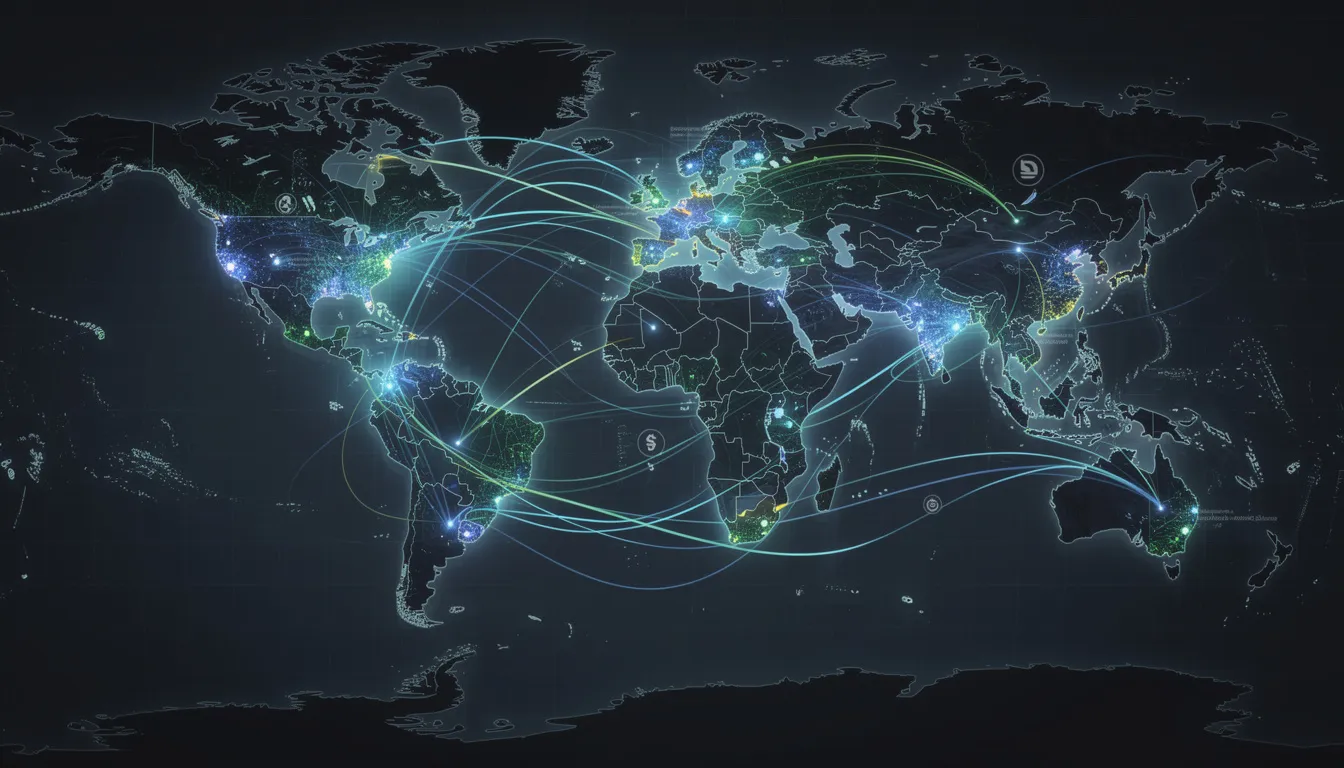
Modern layering increasingly involves digital assets. Criminals convert funds into cryptocurrencies, use mixers and privacy coins to break the on-chain connection between transactions, and route trade invoices through financial hubs like Hong Kong, Singapore, or Caribbean offshore centers.
The layering stage is where the money trail becomes deliberately murky. Each additional transaction adds complexity that investigators must unravel.
Integration: Clean Money Returns
Integration is when laundered money re-enters the economy as apparently legitimate funds. At this point, the criminal proceeds can be used for conventional investments, luxury purchases, or business operations without raising suspicion.
Common integration methods include:
- Property investments: Purchasing real estate in cities like London, Dubai, or Toronto
- Loan-back schemes: Offshore shell companies “loan” funds back to the criminal’s legitimate business
- Business investments: Buying into legal businesses that generate legitimate-looking income
- Luxury assets: Acquiring art, yachts, or high-end vehicles
Some modern schemes compress these stages dramatically. Online fraud funds can move from victim bank accounts directly into digital assets, then into luxury purchases with minimal traditional banking involvement. The speed of electronic transactions means placement and layering can occur within minutes rather than weeks.
Links to Terrorist Financing and Proliferation Financing
While money laundering, terrorist financing, and proliferation financing share overlapping techniques, they serve fundamentally different purposes. Money laundering hides criminal profits. Terrorist financing funds violent acts. Proliferation financing supports weapons of mass destruction programs.
Terrorist Financing: Different Sources, Similar Channels
A critical distinction: terrorist financing can involve both illegal and fully legal sources. Donations to front charities, profits from small businesses, and contributions from sympathizers may all be completely legal in origin—but they’re directed toward illegal ends.
In the early 2000s, hawala systems—informal value transfer networks common in the Middle East and South Asia—were identified as key channels for terrorist financing. Money could move across borders without entering formal banking systems, making detection extremely difficult.
More recently, terrorist organizations have exploited:
- Crowdfunding platforms for small-value online donations
- Social media payment features
- Prepaid cards and mobile payment systems
- Trade in commodities like oil or antiquities
The funds typically flow in a relatively linear pattern toward supporting recruitment, training, logistics, and attacks—unlike money laundering’s circular goal of returning clean funds to their original owners.
Proliferation Financing: Funding Weapons Programs
Proliferation financing involves the procurement of nuclear, chemical, or biological weapons-related materials. This often includes dual-use items—equipment with legitimate commercial applications that can also be used in weapons programs.
These schemes typically involve:
- Front companies established in East Asia, the Middle East, or Eastern Europe
- Complex trade routes designed to disguise the true destination of goods
- Manipulation of trade finance documents
- Use of intermediary countries to circumvent sanctions
International regimes specifically target proliferation financing through UN Security Council sanctions, FATF Recommendations, and export control agreements. These mechanisms blacklist entities, monitor suspicious trade finance transactions, and require enhanced due diligence for high-risk transactions.
Both terrorist and proliferation financiers abuse the same channels that money launderers use: banks, shell companies, trade finance, and digital asset platforms. This overlap creates significant challenges for compliance teams trying to distinguish between ordinary trade, tax evasion, and genuinely high-risk activity supporting terrorism or weapons programs.
Regulatory Framework and Institutional Responses
Since the late 1980s, a global network of laws and standards has been created to combat money laundering. The framework has grown increasingly complex after watershed events like the 9/11 attacks and the 2008 financial crisis exposed vulnerabilities in the financial system.
The Financial Action Task Force (FATF)
Founded in 1989 by the G7, FATF has become the global standard-setter for anti-money laundering and counter-terrorist financing efforts. Its 40 Recommendations provide the framework that most countries use to structure their AML/CFT regimes.
Key FATF mechanisms include:
| Mechanism | Purpose |
|---|---|
| Mutual Evaluations | Peer reviews assessing each country’s compliance |
| Grey List | Countries with strategic deficiencies under increased monitoring |
| Black List | High-risk jurisdictions subject to countermeasures |
| Recommendation Updates | Ongoing refinement to address emerging threats |
Major Legal Milestones
The regulatory landscape has evolved significantly over three decades:
- 1991: EU First Anti-Money Laundering Directive establishes baseline requirements
- 2001: USA PATRIOT Act expands AML and counter-terrorist financing duties following 9/11
- 2015–2020: EU 4th, 5th, and 6th Anti-Money Laundering Directives strengthen beneficial ownership transparency and extend obligations to new sectors
- 2019: FATF updates Recommendation 15 to cover virtual assets and VASPs
National-level implementation varies. In the United States, states like Florida have enacted laws such as the Control of Money Laundering and Terrorist Financing in Financial Institutions Act, building on federal rules with stricter local requirements.
Financial Intelligence Units (FIUs)
Every effective AML regime depends on a financial intelligence unit to receive, analyze, and disseminate suspicious transaction reports. In the United States, FinCEN (Financial Crimes Enforcement Network) serves this function. EU Member States each maintain national FIUs that coordinate through the Egmont Group and EU-level mechanisms.
These units transform raw SARs into actionable financial intelligence for law enforcement, connecting the dots across institutions and sometimes across borders.
Europol and EU-Level Coordination
Within the EU, Europol plays a central coordinating role through several specialized units:
- Europol Criminal Assets Bureau (ECAB): Supports cross-border asset tracing
- CARIN Network: Connects asset recovery offices across jurisdictions
- Financial Crime Information Centre (FCIC): Provides secure information exchange
The EMPACT 2022–2025 priorities explicitly include combatting fraud, tracing criminal assets, and tackling serious and organized crime. Money laundering is embedded in this broader EU security strategy because it enables virtually every other form of serious crime.
Modern Trends and Techniques in Money Laundering
Digitalization has fundamentally transformed how criminals launder money. Organized crime groups now combine traditional cash methods with online platforms, digital wallets, and virtual assets to move funds faster and across more jurisdictions than ever before.
Virtual Currencies and DeFi Protocols
Crypto-related criminal activity reached approximately $40.9 billion in 2024, demonstrating how thoroughly digital assets have been integrated into laundering operations. The mechanics follow familiar patterns adapted to new technology:
- Placement: Converting fiat currency or crime proceeds into cryptocurrency via exchanges or peer-to-peer transactions
- Layering: Using mixers, tumblers, and privacy coins to break the connection between source and destination wallets
- Integration: Converting back to fiat through exchanges in jurisdictions with weaker controls
Decentralized finance (DeFi) protocols add another layer of complexity. These platforms operate without traditional intermediaries, making it difficult to identify who controls funds or to apply standard KYC requirements.
Online Gaming and Gambling Platforms
Online gaming has emerged as a significant laundering channel. The American Gaming Association (AGA) updated its AML guidance in the 2020s to address these risks, covering:
- Cryptocurrency and digital wallets
- Remote betting environments
- In-game virtual currencies
- Cross-border online gambling operations
The basic scheme involves purchasing in-game currency or casino chips with illicit funds, engaging in minimal actual play, then cashing out as apparent “winnings.” The laundered funds now appear as gambling proceeds with documentation to support their legitimate origin.
“Financial grooming” involves criminals building long-term online relationships with victims to convince them to move money. These scams—sometimes called “pig butchering”—can generate massive amounts of illicit funds that are then layered through:
- Multiple bank accounts
- Investment platforms
- Digital asset exchanges
- International wire transfers
The victims themselves often become unwitting money mules, moving funds without understanding they’re participating in fraud.
Trade-Based Money Laundering
Trade based money laundering remains one of the most difficult schemes to detect. Common techniques include:
- Over-invoicing: Billing $50,000 for goods worth $25,000, with the extra $25,000 representing laundered funds
- Under-invoicing: The reverse, allowing value to be transferred without corresponding payment records
- Phantom shipments: Invoicing for goods that were never shipped
- Circular trade routes: Moving goods through multiple countries to obscure the true transaction
These schemes are particularly prevalent in Asia, the Middle East, and Europe’s major trading hubs where high volumes of legitimate trade provide cover.
Professional Money Laundering Networks
A growing trend involves professional money launderers—specialized networks offering laundering as a paid service to multiple criminal groups. These professionals maintain infrastructure (shell companies, bank accounts, real estate holdings) that can be used repeatedly for different clients.
One illustrative pattern: in the mid-2010s, a money laundering ring invested more than EUR 60 million in European property markets. The funds originated from organized crime in Eastern Europe and were layered through offshore entities before being integrated through luxury real estate purchases in major cities.
Cryptocurrency, Online Gaming, and Beneficial Ownership Transparency
Regulators have focused intensively on three areas where traditional AML frameworks proved inadequate: virtual assets, online gaming, and transparency around who ultimately owns and controls companies.
Cryptocurrency and Virtual Assets
FATF’s 2019 update to Recommendation 15 marked a watershed moment, extending AML/CFT requirements to virtual assets and virtual asset service providers (VASPs). Key requirements include:
- The Travel Rule: VASPs must transmit originator and beneficiary information with transactions above certain thresholds
- Customer due diligence: Exchanges must verify customer identity
- Transaction monitoring: Suspicious activity must be flagged and reported
- Sanctions screening: Transactions must be checked against sanctions lists
However, implementation remains uneven. As of mid-2024, many jurisdictions are still only partially compliant with these standards. Criminals exploit gaps by:
- Using unregulated exchanges in non-compliant jurisdictions
- Conducting peer-to-peer trades that bypass centralized platforms
- Exploiting DeFi protocols with no identifiable operator
- Converting rapidly between different cryptocurrencies to complicate tracing
Online Gaming Sector Response
Regulators in North America, Europe, and Southeast Asia have introduced stricter licensing and monitoring rules since approximately 2018. Requirements now typically include:
| Requirement | Purpose |
|---|---|
| Real-name verification | Prevents anonymous account creation |
| Transaction monitoring | Identifies suspicious betting patterns |
| Source of funds checks | Verifies legitimate origin of deposits |
| Suspicious activity reporting | Ensures authorities receive intelligence |
Casinos and online gaming operators are now considered reporting entities in many countries, subject to the same obligations as banks for AML purposes.
Beneficial Ownership Transparency
Shell companies and trusts have historically been used to hide the beneficial owners of assets—the individuals who ultimately own or control legal entities. Major leaks in 2016 and subsequent years exposed how easily criminals, corrupt officials, and tax evaders could hide behind layers of corporate structures.
Policy responses include:
- Public beneficial ownership registers: Some EU countries now require disclosure of who controls companies
- UK reforms: Post-2016 measures require disclosure of persons with significant control
- Australia’s AML/CTF Amendment (Tranche 2): Starting from 2026, extends AML obligations to “gatekeeper” professions including lawyers, accountants, and real estate agents
- Singapore’s Housing Developers Act: Requires AML checks on property buyers
These reforms aim to make it much harder to hide behind anonymous corporate structures when purchasing property or moving funds through legal businesses.
Role of Financial Institutions and Private-Sector Compliance
Banks, payment firms, casinos, real estate agents, lawyers, and accountants sit on the front line of AML compliance. They’re responsible for detecting and reporting suspicious activity to authorities—a role that comes with significant legal obligations and potential penalties.
Core Compliance Tools
Effective AML programs rely on several key mechanisms:
- Customer Due Diligence (CDD): Verifying customer identity and understanding the nature of business relationships
- Enhanced Due Diligence (EDD): Additional scrutiny for high-risk customers such as politically exposed persons (PEPs) or clients from high-risk jurisdictions
- Ongoing Transaction Monitoring: Automated systems that flag unusual patterns for review
- Sanctions and PEP Screening: Checking customers against watchlists
Technology-Enabled Detection
Automated solutions using data analytics, machine learning, and network analysis help institutions identify unusual patterns that rules-based systems might miss. These technologies can detect:
- Rapid movement of small amounts through many accounts
- Links between customers and known high-risk jurisdictions
- Network connections suggesting coordinated activity
- Deviations from expected transaction behavior
Global providers offer integrated AML platforms that unify data from credit records, corporate registries, sanctions lists, and adverse media sources into comprehensive risk assessments.
The Compliance Burden
The cost of compliance is substantial. Large international banks spend billions of dollars annually on AML programs, employing thousands of analysts and investigators. When controls fail, the consequences are severe—multi-hundred-million-dollar penalties were common in the 2010s and early 2020s for major institutions found to have inadequate programs.
There’s a constant tension between effective AML and “de-risking”—where institutions close accounts or avoid certain regions and sectors entirely rather than manage the compliance burden. This can inadvertently push legitimate customers toward less regulated channels.
Effective anti-money laundering requires cooperation between private institutions, regulators, and law enforcement. Public-private partnerships and information sharing initiatives have become increasingly important for identifying sophisticated schemes that cross institutional boundaries.
Real-World Impact and Notable Case Patterns
Money laundering has tangible consequences that extend far beyond regulatory concerns. It distorts markets, fuels corruption, undermines democratic institutions, and can finance violence and terrorism. The assets acquired through laundering give criminal enterprises economic power that translates into political influence and social harm.

Common Patterns in Major Cases
Over the past two decades, investigators have identified recurring patterns in large-scale laundering operations:
- Baltic and Central European banks: Used as conduits for Russian and former Soviet Union funds, with weak controls allowing billions in suspicious transfers
- Luxury real estate: London, Paris, and other major cities saw significant property purchases by shell companies with hidden beneficial owners
- Offshore zones: Caribbean and Pacific jurisdictions provided the corporate structures that obscured ownership
Cyber-Enabled Fraud at Scale
Cyber-enabled fraud schemes in East and Southeast Asia cost victims approximately $37 billion in 2023 alone. These operations channel proceeds through multiple layers:
- Victim funds are transferred to accounts controlled by criminal networks
- Money mules move funds through personal accounts, often recruited through fake job advertisements
- Funds are converted to cryptocurrency or moved through shell companies
- Multiple layering transactions across jurisdictions
- Final integration through property, businesses, or luxury goods
The speed of these operations means funds can move from victim accounts to untraceable cryptocurrency holdings within hours.
Illustrative Case Pattern: European Property Laundering
In a pattern observed across multiple cases in the mid-2010s, organized crime groups from Eastern Europe laundered proceeds through a systematic approach:
- Source: Criminal proceeds from fraud, drug trafficking, and other serious crimes totaling tens of millions of euros
- Layering: Funds moved through Latvian and Estonian banks, into shell companies registered in the British Virgin Islands and Cyprus
- Integration: Property purchases in London, Paris, and Spanish coastal cities—all through corporate vehicles that obscured the ultimate beneficial owners
Authorities eventually traced the connections through banking records, property registries, and corporate documentation, but only after years of investigation and substantial international cooperation.
Asset Recovery Focus
Law enforcement increasingly focuses on freezing and confiscating criminal assets early in investigations. Asset recovery serves multiple purposes:
- Prevents funds from disappearing before prosecution concludes
- Deprives criminal enterprises of operating capital
- Provides potential compensation for victims
- Demonstrates that crime does not pay
The process requires coordination across jurisdictions, since laundered funds typically cross multiple borders before reaching their final destination.
The real-world impact of money laundering—on financial markets, governance, and public safety—underscores the need for continuous improvement in global AML standards, technological tools, and international cooperation.
FAQ
Is it illegal to hold large amounts of cash, or only to launder it?
Simply possessing large cash sums is not automatically illegal in most countries. However, attempting to conceal the criminal origin of that cash constitutes money laundering regardless of the amount. Additionally, failing to declare cash when required by law—for example, when crossing borders with amounts exceeding declaration thresholds (typically $10,000 or equivalent)—can constitute a separate offense. The legal issue isn’t holding cash; it’s the attempt to disguise where it came from or evade legal reporting requirements.
How can ordinary consumers avoid being used as money mule accounts?
Be extremely wary of job offers or online requests asking you to receive and forward funds through your personal bank account. Common red flags include unsolicited messages on social media promising quick earnings, “work from home” opportunities involving money transfers, or romantic interests asking you to move money on their behalf. Never share your banking credentials with anyone. If you receive suspicious approaches, report them to your bank immediately and consider notifying local authorities. Participating in money muling—even unknowingly—can result in criminal charges and frozen accounts.
What are the penalties for money laundering for individuals and companies?
Penalties vary significantly by country but typically include substantial fines, prison sentences (commonly ranging from several years up to more than a decade for serious cases), and confiscation of associated assets. For financial institutions, penalties include regulatory fines that can reach hundreds of millions or even billions of dollars, restrictions on business activities, and potential loss of banking licenses. Individual executives may face personal liability, including criminal prosecution in cases of willful blindness or negligence.
Does using cryptocurrency automatically mean higher money laundering risk?
Most cryptocurrency use is completely legal, and reputable exchanges now apply KYC/AML controls similar to those required of traditional banks. However, anonymity-enhancing features—such as mixers, privacy coins, and certain DeFi protocols—can make some platforms attractive for launderers. The risk level depends largely on the specific services used. Regulated exchanges in compliant jurisdictions present lower risk than unregulated, offshore, or peer-to-peer services. The key factor is whether effective identity verification and transaction monitoring are in place.
How can small businesses protect themselves from inadvertently facilitating money laundering?
Start by implementing basic KYC checks for unusual or large customers—verify identity and understand the nature of their business. Maintain clear records of transactions, including how payments were made and received. Watch for red flags such as requests to route payments through unrelated third parties, customers who seem unconcerned about pricing, or unusual payment methods. If you operate in higher-risk industries like real estate, luxury goods, or money services, consult professional advisors or sectoral AML guidelines to ensure your controls are adequate. When in doubt, seek legal advice before proceeding with suspicious transactions.


